
 English
 Deutsch
 한국어
한국어
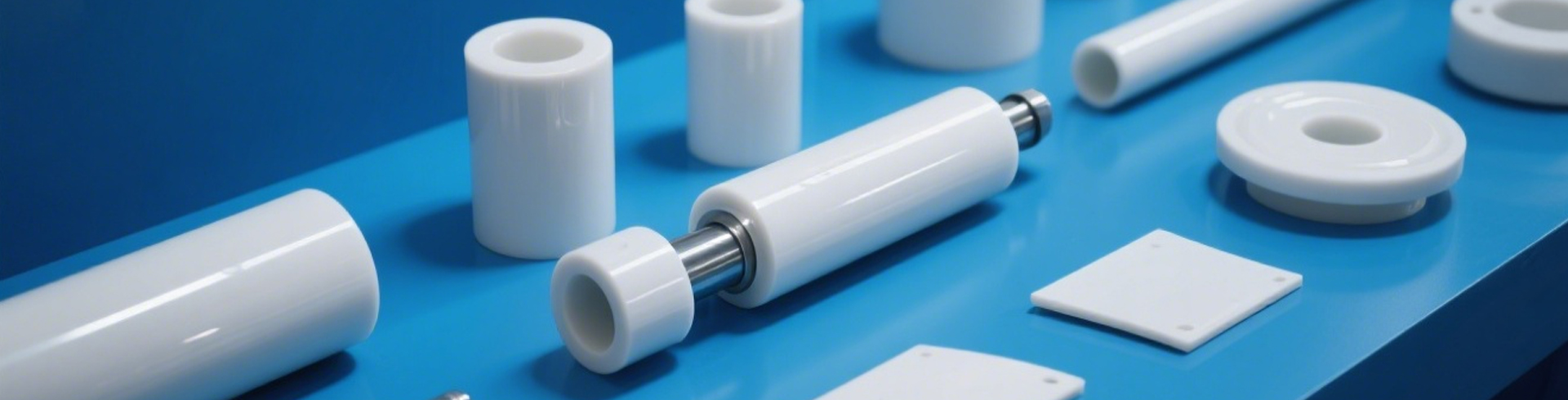
Conventional specifications | Customization supported
| Properties of Silicon Nitride (Si3N4) Ceramics | ||
| Item | Unit | Typical Values |
| Physical Properties | ||
| Density | g/cm3 | 3.2 |
| Mechanical Properties | ||
| Moh's hardness | Grade | 9 |
| Rockwell Hardness | HRA | 90 |
| Vickers Hardness (Hv50) | HV0.5 | >1550 |
| Modulus of Elasticity | Gpa | 290 |
| Flexural Strength | Mpa | >600 |
| Compressive Strength | Mpa | 2500 |
| Fracture toughness | Mpam1/2 | >6.0 |
| Thermal Properties | ||
| Maximum use temperature | °C | 1200 |
| Thermal Conductivity | W/(m.k) | 15-20 |
| Thermal Expansion Coefficient | 10-6/°C | >3.1 |
| Thermal Shock Resistance | △T°C | 500 |
| Specific Heat Capacity | KJ/kg.K | 700 |
| Electrical Properties | ||
| Dielectric Strength | KV/mm | 15 |
| Dielectric Constant | Er | |
| Volume Resistivity at 20°C | Ω.cm | 1.0X10¹² |
Material characteristics
Silicon Nitride (Si3N4) is an advanced engineering ceramic material with outstanding high temperature performance and excellent mechanical
properties.
1. High strength and fracture toughness at high temperatures
Silicon nitride exhibits high strength and excellent fracture toughness at high temperatures, which makes it an ideal choice for many
high-temperature applications.
Automotive engine parts: Silicon nitride is widely used in high-temperature structural parts in automotive engines, such as piston rings, turbine
blades, and fuel injectors. Its high strength and wear resistance enable these parts to work stably under high temperature, high pressure, and
harsh environments, improving the efficiency and reliability of the engine.
Gas turbine and combustion chamber parts: Silicon nitride is also widely used as gas turbine and combustion chamber parts, such as turbine
bearings, combustion chamber liners, and nozzles. Its high-temperature strength and corrosion resistance enable these parts to operate stably
for a long time under high temperature and high pressure environments, improving the performance and life of the equipment.
2. Low thermal expansion coefficient and extremely high thermal shock resistance
Silicon nitride has a low coefficient of thermal expansion and extremely high resistance to thermal shock, making it an excellent performer in
high-temperature environments.
Low Coefficient of Thermal Expansion: Silicon nitride's low coefficient of thermal expansion means it has less ability to deform at high
temperatures, making it particularly useful in high-temperature applications that require stable size and shape, such as high-temperature
furnaces and heat-treating equipment.
Extremely High Thermal Shock Resistance: Silicon nitride exhibits extremely high thermal shock resistance, which means it can maintain its strength and integrity under rapid temperature
changes. This makes it very useful in applications that need to undergo frequent temperature cycles, such as thermoelectric couplers and spark
plug insulators.
Silicon nitride's unique combination of properties makes it widely used in high temperature, high pressure and harsh environments. From the
automotive industry to the energy industry, from aerospace to industrial manufacturing, silicon nitride plays an important role, providing reliable
material solutions for various high-temperature structural parts. Its excellent performance and durability not only improve the efficiency and
reliability of equipment, but also promote technological progress and innovation.


