¿Qué Factores Influyen En El Rendimiento De Disipación De Calor De Sustratos Cerámicos De Nitruro De Aluminio?

2026-11-20

1. Propiedades básicas del propio material

Esto sirve como base para determinar la capacidad de disipación de calor, que se evalúa principalmente en base a dos métricas clave:

Conductividad térmica:
Este es el parámetro más crítico. Mientras que la conductividad térmica teórica de
Cerámica de nitruro de aluminio (AlN)
Es muy 

Alto - aproximadamente 320 W / (m · K) - los valores reales varían dependiendo de factores como la pureza del material y el proceso de sinterización, normalmente cayendo 

Dentro del rango de 170-280 W / (m · K). Una mayor conductividad térmica se traduce en un rendimiento superior de disipación de calor.

Coeficiente de expansión térmica (CTE):
Esto determina qué tan bien el sustrato cerámico coincide con otros componentes, como el chip o la placa base de metal. Si hay un desajuste significativo en el CTE, las fluctuaciones de temperatura pueden generar estrés, lo que puede llevar a grietas y, en consecuencia, a la interrupción de la ruta de disipación de calor.
aluminum oxide sheet.JPG

2. Estructura del producto y diseño de dimensiones

Una estructura bien diseñada permite la plena realización del potencial de disipación de calor, principalmente en relación con tres aspectos:

Espesor:
Como se discutió anteriormente, no hay un único valor óptimo. El espesor excesivo aumenta la resistencia térmica, mientras que el espesor insuficiente 

Compromete la resistencia mecánica, lo que hace que el componente sea propenso a dañarse. Se debe lograr un equilibrio entre la resistencia térmica, la mecánica 

Fuerza y espacio de instalación disponible; el rango común de 0,25 a 1,0 mm es el resultado de tal compensación.

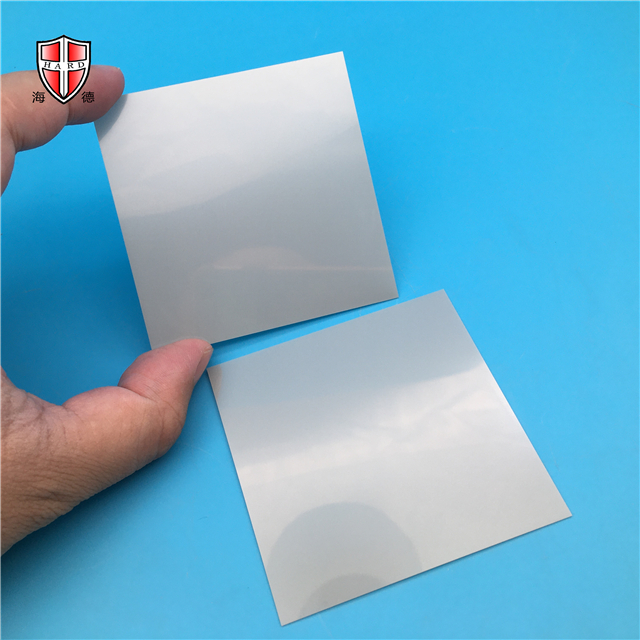
Planitud de la superficie:
Una superficie más plana asegura un área de contacto más grande con Interfases térmicas (como astillas o disipadores de calor) y minimiza los espacios. Desde 

El aire, que puede ocupar estos espacios, tiene una conductividad térmica extremadamente baja, aumenta significativamente la resistencia térmica de contacto y reduce 

Eficiencia de disipación de calor.

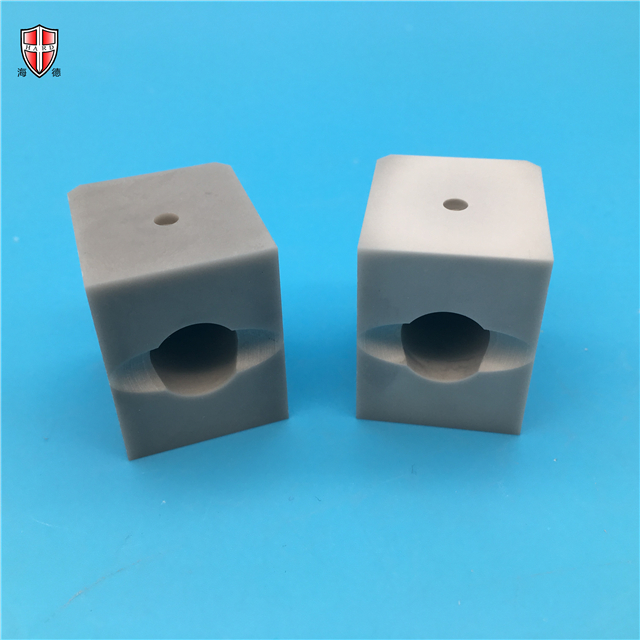
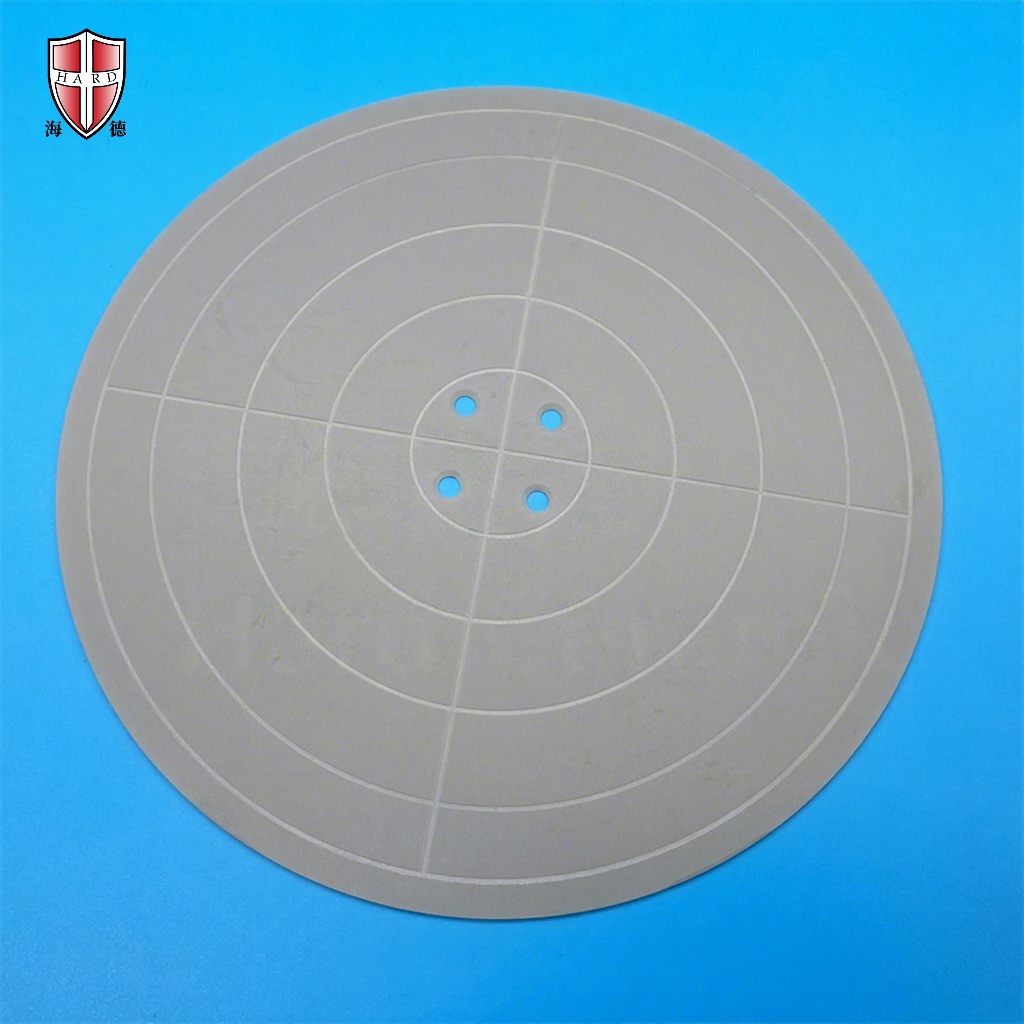
Forma y aperturas:
Las geometrías complejas (por ejemplo, las que presentan ranuras o jefes en relieve) o la inclusión de aperturas pueden ser necesarias para 

Acomodar la instalación de componentes; sin embargo, estas características también pueden reducir el área de disipación de calor efectiva o aumentar la temperatura localizada 

Resistencia. Dichos diseños deben optimizarse en función de los requisitos específicos de la aplicación.
aluminum nitride ceramics.JPG

3. Condiciones externas coincidentes para la aplicación

Incluso si un
Componente cerámico
Posee excelentes propiedades intrínsecas, una instalación inadecuada o una mala integración pueden disminuir significativamente su 

Rendimiento de refrigeración.

Materiales de interfaz:
Los materiales de interfaz térmica, como grasa térmica o almohadillas térmicas, generalmente se requieren entre la cerámica 

Componente y el chip o disipador de calor. La conductividad térmica, el grosor y el ajuste de estos materiales influyen directamente en la resistencia térmica de contacto.

Compatibilidad del sistema de refrigeración:
Un componente cerámico es simplemente una parte de la ruta térmica; la eficacia general de la refrigeración depende en última instancia 

En la capacidad del sistema de refrigeración aguas abajo (por ejemplo, disipadores de calor, ventiladores o configuraciones de refrigeración líquida). Si el sistema de refrigeración no tiene suficiente capacidad, el 

El calor conducido por el componente cerámico no se puede disipar de manera eficiente, lo que limita el rendimiento general de refrigeración.

Presión de instalación y sellado:
Se debe aplicar la presión adecuada durante la instalación para garantizar un ajuste perfecto entre el componente cerámico y 

Partes adyacentes, minimizando cualquier brecha. Además, la calidad del sello afecta el entorno operativo; por ejemplo, en condiciones húmedas o polvorientas,

 Un mal sellado puede llevar a una degradación en el rendimiento de los componentes de refrigeración.
IMG_E5453.JPG

We use cookie to improve your online experience. By continuing to browse this website, you agree to our use of cookie.

Cookies

Please read our Terms and Conditions and this Policy before accessing or using our Services. If you cannot agree with this Policy or the Terms and Conditions, please do not access or use our Services. If you are located in a jurisdiction outside the European Economic Area, by using our Services, you accept the Terms and Conditions and accept our privacy practices described in this Policy.
We may modify this Policy at any time, without prior notice, and changes may apply to any Personal Information we already hold about you, as well as any new Personal Information collected after the Policy is modified. If we make changes, we will notify you by revising the date at the top of this Policy. We will provide you with advanced notice if we make any material changes to how we collect, use or disclose your Personal Information that impact your rights under this Policy. If you are located in a jurisdiction other than the European Economic Area, the United Kingdom or Switzerland (collectively “European Countries”), your continued access or use of our Services after receiving the notice of changes, constitutes your acknowledgement that you accept the updated Policy. In addition, we may provide you with real time disclosures or additional information about the Personal Information handling practices of specific parts of our Services. Such notices may supplement this Policy or provide you with additional choices about how we process your Personal Information.


Cookies

Cookies are small text files stored on your device when you access most Websites on the internet or open certain emails. Among other things, Cookies allow a Website to recognize your device and remember if you've been to the Website before. Examples of information collected by Cookies include your browser type and the address of the Website from which you arrived at our Website as well as IP address and clickstream behavior (that is the pages you view and the links you click).We use the term cookie to refer to Cookies and technologies that perform a similar function to Cookies (e.g., tags, pixels, web beacons, etc.). Cookies can be read by the originating Website on each subsequent visit and by any other Website that recognizes the cookie. The Website uses Cookies in order to make the Website easier to use, to support a better user experience, including the provision of information and functionality to you, as well as to provide us with information about how the Website is used so that we can make sure it is as up to date, relevant, and error free as we can. Cookies on the Website We use Cookies to personalize your experience when you visit the Site, uniquely identify your computer for security purposes, and enable us and our third-party service providers to serve ads on our behalf across the internet.

We classify Cookies in the following categories:
 ●  Strictly Necessary Cookies
 ●  Performance Cookies
 ●  Functional Cookies
 ●  Targeting Cookies


Cookie List
A cookie is a small piece of data (text file) that a website – when visited by a user – asks your browser to store on your device in order to remember information about you, such as your language preference or login information. Those cookies are set by us and called first-party cookies. We also use third-party cookies – which are cookies from a domain different than the domain of the website you are visiting – for our advertising and marketing efforts. More specifically, we use cookies and other tracking technologies for the following purposes:

Strictly Necessary Cookies
These cookies are necessary for the website to function and cannot be switched off in our systems. They are usually only set in response to actions made by you which amount to a request for services, such as setting your privacy preferences, logging in or filling in forms. You can set your browser to block or alert you about these cookies, but some parts of the site will not then work. These cookies do not store any personally identifiable information.

Functional Cookies
These cookies enable the website to provide enhanced functionality and personalisation. They may be set by us or by third party providers whose services we have added to our pages. If you do not allow these cookies then some or all of these services may not function properly.

Performance Cookies
These cookies allow us to count visits and traffic sources so we can measure and improve the performance of our site. They help us to know which pages are the most and least popular and see how visitors move around the site. All information these cookies collect is aggregated and therefore anonymous. If you do not allow these cookies we will not know when you have visited our site, and will not be able to monitor its performance.

Targeting Cookies
These cookies may be set through our site by our advertising partners. They may be used by those companies to build a profile of your interests and show you relevant adverts on other sites. They do not store directly personal information, but are based on uniquely identifying your browser and internet device. If you do not allow these cookies, you will experience less targeted advertising.

How To Turn Off Cookies
You can choose to restrict or block Cookies through your browser settings at any time. Please note that certain Cookies may be set as soon as you visit the Website, but you can remove them using your browser settings. However, please be aware that restricting or blocking Cookies set on the Website may impact the functionality or performance of the Website or prevent you from using certain services provided through the Website. It will also affect our ability to update the Website to cater for user preferences and improve performance. Cookies within Mobile Applications

We only use Strictly Necessary Cookies on our mobile applications. These Cookies are critical to the functionality of our applications, so if you block or delete these Cookies you may not be able to use the application. These Cookies are not shared with any other application on your mobile device. We never use the Cookies from the mobile application to store personal information about you.

If you have questions or concerns regarding any information in this Privacy Policy, please contact us by email at . You can also contact us via our customer service at our Site.