
 Deutsch
 한국어
한국어 日本語
日本語 Français
 Português
 Español
 Русский
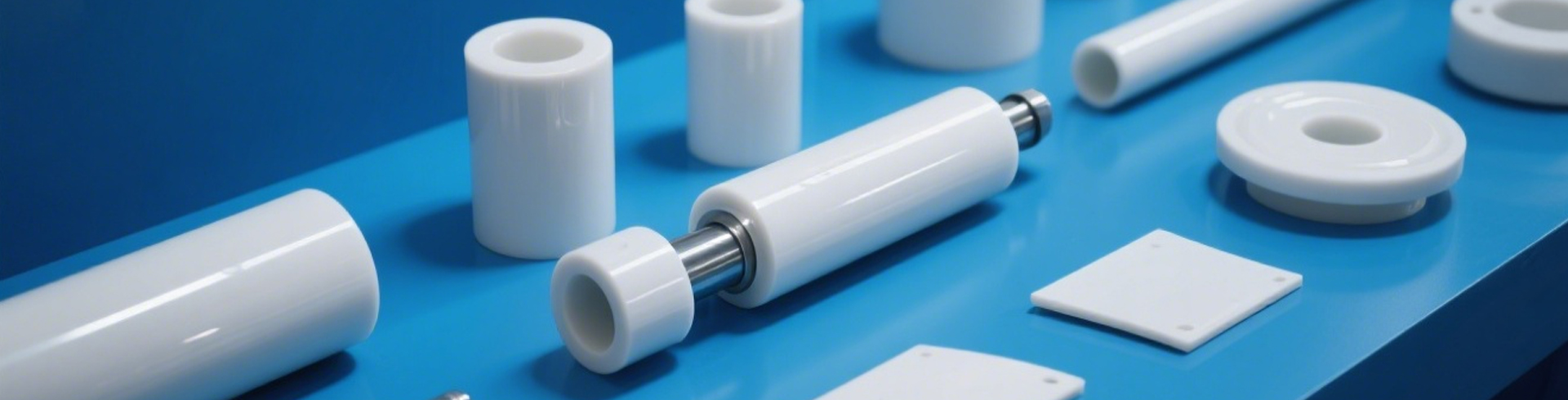
| Machinable Glass (Macor) Ceramic Properties | ||
| Item | Unit | Typical Values |
| Physical Properties | ||
| Color | White | |
| Main Composition | 55% Fluorophlogopite + 45% Borosilicate Glass | |
| Density | g/cm3 | 2.60 |
| Apparent Porosity | 0.07% | |
| Water Absorption | 0 | |
| Normal Temperature Outlet Rate | ml/S·cm2 | 8.8*10-9 |
| Helium Transmission Rate | ml/S | 1*10-10 |
| Mechanical Properties | ||
| Rockwell Hardness(45N) | R45N | 40 |
| Vickers Hardness (Load 500g) | Gpa(Kg/mm2) | 11.5(1175) |
| Flexural Strength (20°C) | Mpa | >108 |
| Compressive Strength (20°C) | Mpa | 488 |
| Modulus of Elasticity (25°C) | Gpa | 65 |
| Poisson's Ratio | 0.29 | |
| Impact Toughness | KJ/m2 | >2.56 |
| Thermal Properties | ||
| Specific Heat (25°C) | kJ/kg°C | 0.79 |
| Thermal Conductivity (25°C) | W/m.K | 1.71 |
| Thermal Diffusivity (25°C) | x 10-7 m²/s | 7.3 |
| Thermal Expansion Coefficient | 10-6/°C | 7.2 |
| Thermal Shock Resistance | △T°C | 200 |
| Maximum Working Temperature | °C | 800 |
| Electric Properties | ||
| Dielectric Strength | KV/mm | >40 |
| Volume Resistivity(25°C) | Ω.cm | 1.08*1016 |
| Volume Resistivity(200°C) | Ω.cm | 1.5*1012 |
| Volume Resistivity(500°C) | Ω.cm | 1.1*109 |
| Dielectric Loss | 1-4*10-3 | |
| Dielectric Constant | Er | 6-7 |
Features
macor ceramics are a very unique and useful material with a number of compelling properties.
1. Excellent mechanical properties and applications
Machinable ceramics possess exceptional mechanical properties, including high hardness, high strength, and excellent compressive strength. These
properties make machinable ceramics ideal for many industrial applications, especially in environments where materials need to withstand extreme forces and
abrasion.
High Hardness and Strength:
Rockwell Hardness: R45N = 40.
Vickers Hardness (500g Load): 11.5 GPa (1175 Kg/mm²).
Modulus of Elasticity: 65 GPa at 25℃.
Flexural Strength: 108 MPa at 20℃.
Compressive Strength: 488 MPa at 20℃.
These mechanical properties enable machinable ceramics to remain stable under impact and stress, reducing the likelihood of breakage. Due to their high
strength and wear resistance, machinable ceramics are often used to manufacture a variety of high-performance industrial components, such as parts in
milling machines, sliding parts, and cutting tool inserts.
2. Excellent thermal properties
Machinable ceramics also possess excellent thermodynamic properties, including high-temperature stability, low coefficient of thermal expansion, and good
thermal shock resistance.
Maximum operating temperature: 800℃.
Thermal conductivity: 1.71 W/(m·K) at 25℃.
Coefficient of thermal expansion: 7.2 × 10⁻⁶/℃.
Thermal shock resistance: 200℃.
These properties make machinable ceramics extremely useful in applications requiring thermal insulation or heat preservation. For example, in certain
chemical process equipment and high-temperature furnaces, machinable ceramics can be used as insulation layers to help control temperature and protect
sensitive mechanical components from overheating damage.
3. Excellent electrical performance
Machinable ceramics also possess excellent electrical insulation properties, making them highly valuable in electronic and electrical applications.
Breakdown strength (insulation strength): 30 kV/mm.
Volume resistivity at 20℃: 10¹⁶ Ω·cm at 20℃.
These electrical properties make machinable ceramics highly effective in high-voltage and high-frequency applications, providing reliable insulation protection.
This machinable ceramic material performs exceptionally well in a variety of demanding applications, particularly in fields requiring high hardness, high
strength, and excellent thermal and electrical properties.


