
 Deutsch
 한국어
 日本語
 Français
 Português
 Español
 Русский

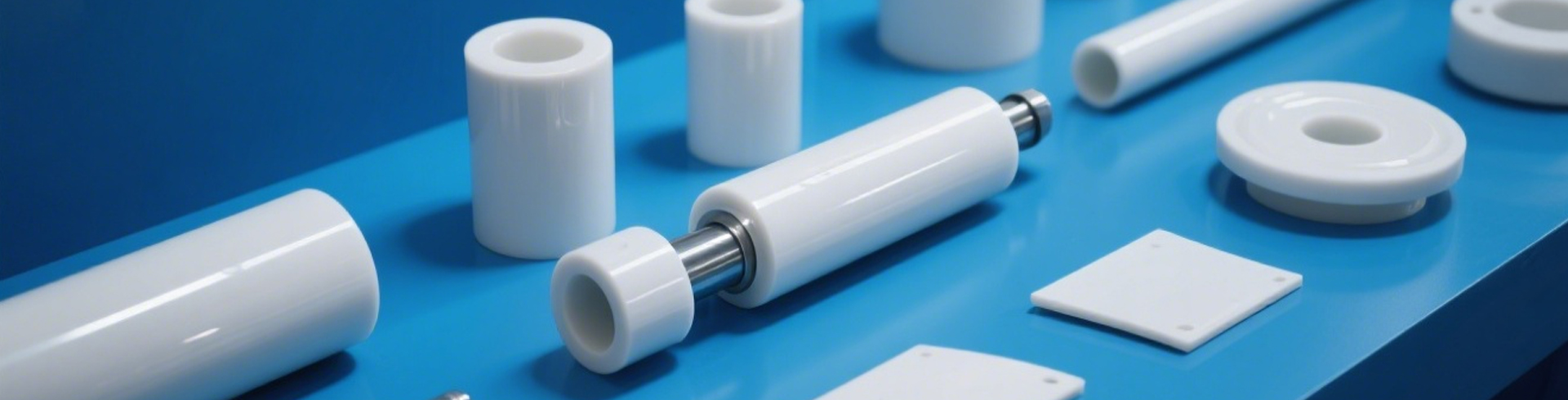
1. What are high-precision ceramic polishing discs?
High-precision ceramic polishing discs are high-precision, disc-shaped components manufactured from advanced engineering ceramic materials through
processes such as precision forming, sintering, grinding, and polishing.
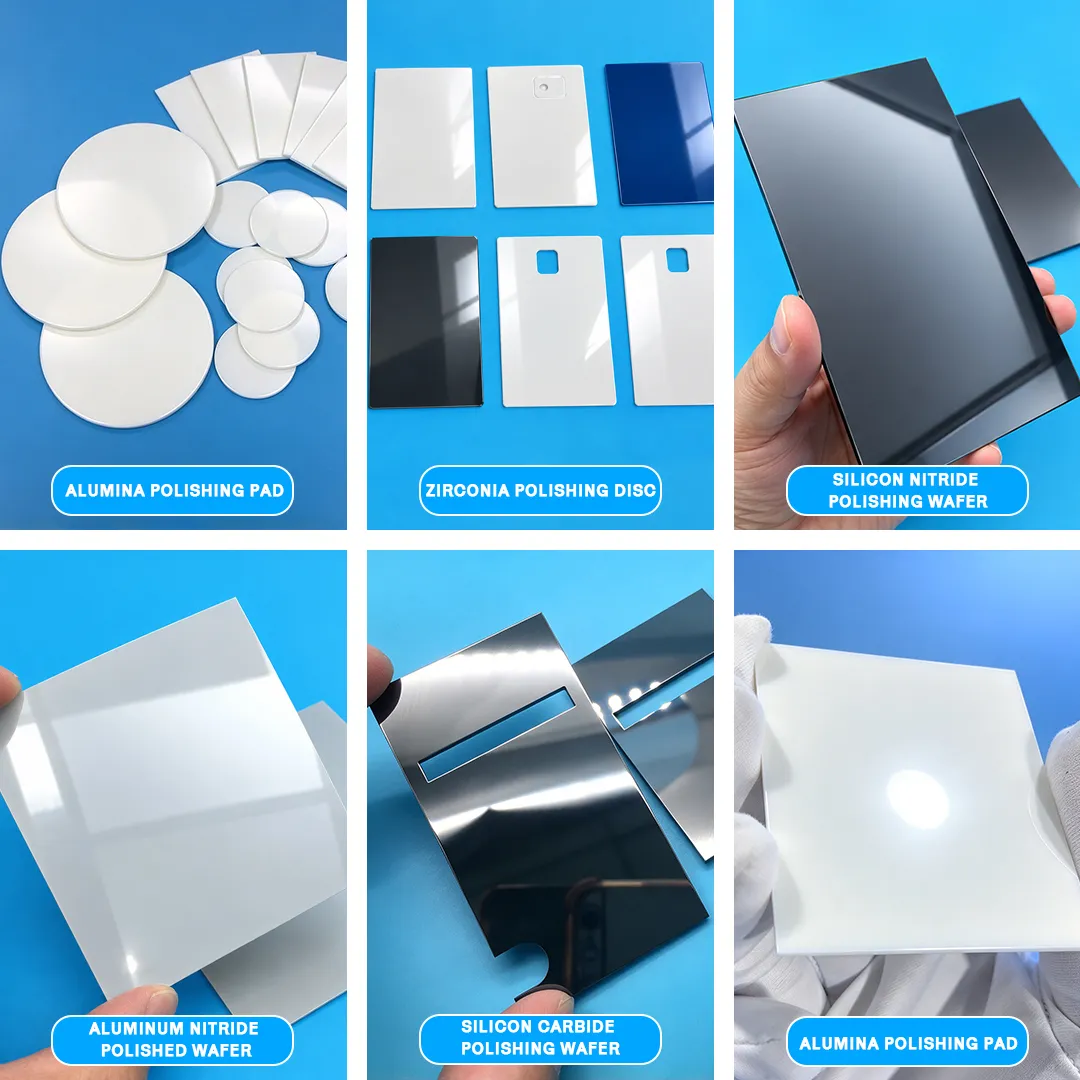
Polishing discs for various types of industrial ceramics
Surface Roughness: Reduces microscopic surface irregularities to meet requirements for precision contact.
Flatness: Controls the overall evenness of a surface.
Parallelism: Controls the parallel relationship between two working surfaces.
Thickness Tolerance: Ensures compliance with requirements for precision assembly and positioning.
Surface Defects: Controls the presence of scratches, edge chipping, micro-cracks, and other localized imperfections.
Dimensional Consistency: Supports the needs of batch assembly and stable production.
It should be noted that surface roughness, flatness, and parallelism are distinct technical specifications.
Even if a ceramic surface achieves a low Ra value, it does not necessarily mean that the entire component possesses an equivalent level of flatness
or parallelism. Therefore, the complete technical requirements for precision-polished ceramic components should be defined based on their intended application.
2. What exactly does a mirror-like finish with an Ra of 0.02 μm signify?
Ra represents the arithmetic mean roughness, which describes the average deviation of a surface's microscopic profile from a reference line.
A surface roughness requirement of Ra 0.02 μm is equivalent to:
Ra = 20 nm
This implies that the product must undergo precise surface processing and rigorous quality control—it is not enough to simply achieve a glossy appearance
through standard mechanical machining.
A mirror-like finish does not necessarily mean that the surface roughness meets the specified requirements.
In actual production, it is common for a product to appear highly glossy, yet fail to meet the required specifications when subjected to roughness testing.
This is because visual reflectivity is influenced by factors such as material color, refractive index, surface cleanliness, lighting angles, and viewing conditions.
In contrast, the Ra value must be evaluated using standardized, compliant surface roughness measurement methods.
Therefore, when assessing the quality of high-precision polished ceramic components, one should not rely solely on visual appearance; instead, the surface
roughness must be verified against product requirements using appropriate measurement techniques.
For a target such as Ra 0.02 μm, it is advisable to clarify the following before processing begins:
Measurement locations and directions;
Inspection instruments and measurement methods;
Sampling length, evaluation length, and filtering conditions;
Whether flatness, parallelism, and thickness need to be measured concurrently;
Presence of scratches, edge chipping, or other visual/cosmetic requirements.
True high-precision mirror polishing involves the integrated control of visual appearance, microscopic surface quality, and geometric accuracy.
Common Roughness Grades
| Ra (μm) | General, superficial description | Typical Applications |
| 3.2 | Standard machined surface; tool marks are visible. | Frames, supports, and non-critical structural components |
| 1.6 | Surface finish is relatively good; tool marks are not prominent. | General assembly fits, standard fasteners |
| 0.8 | Precision-machined; smooth, with no visible tool marks. | Precision bushings, gears, standard sliding surfaces / sealing surfaces |
| 0.4 | High-precision ground surface | Bearings, hydraulic components, and ceramic substrates for thin-film circuits |
| 0.2 | Precision-ground and polished surface | Ceramic rotating and stationary rings, hard sealing faces |
| ≤0.1 | Ultra-precision mirror polishing | Optical components, ultra-high-precision seals, and specialty functional ceramics |
3. Which ceramic materials are suitable for manufacturing high-precision polishing pads?
Ceramic polishing pads are not made from a single material. Different materials vary in terms of hardness, toughness, thermal conductivity, electrical properties,
and the level of difficulty involved in processing them; therefore, the choice of material should be based on the specific application scenario.
1. Zirconia ceramic polishing disc
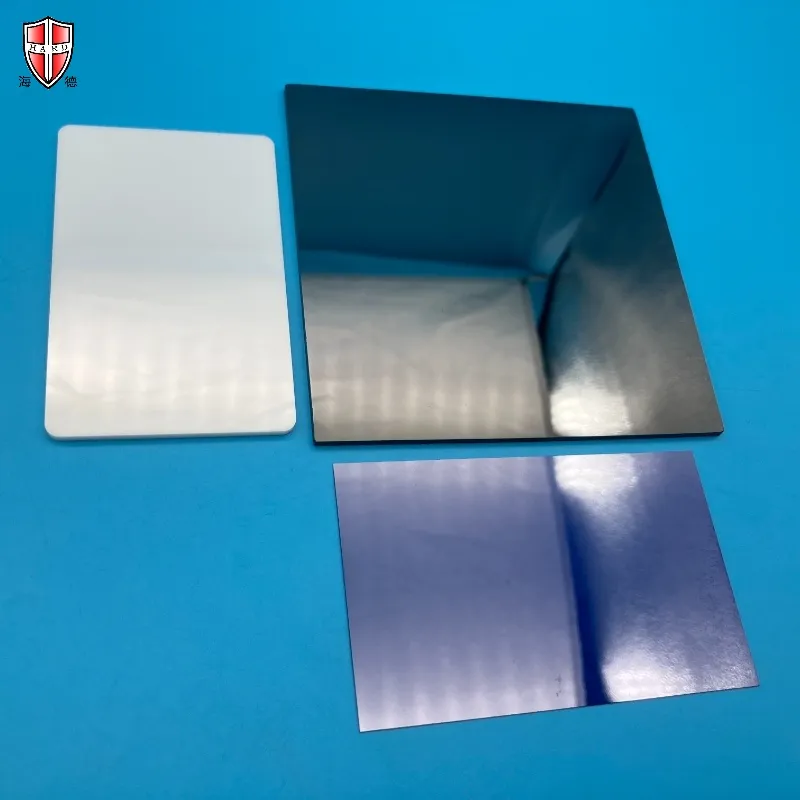
Zirconia ceramics exhibit excellent fracture toughness, wear resistance, and chemical stability.
Key characteristics include:
Relatively high toughness;
Good wear resistance;
Suitability for various precision contact and wear-resistant structural applications;
Versatility in fabrication, allowing for the production of sheets, rings, and complex, custom-shaped components.
Zirconia is well-suited for applications that demand a combination of toughness, wear resistance, and high surface quality; however, the final polishing
outcome depends on the specific material grade, grain structure, and processing techniques employed.
2. Alumina Ceramic Polishing Discs
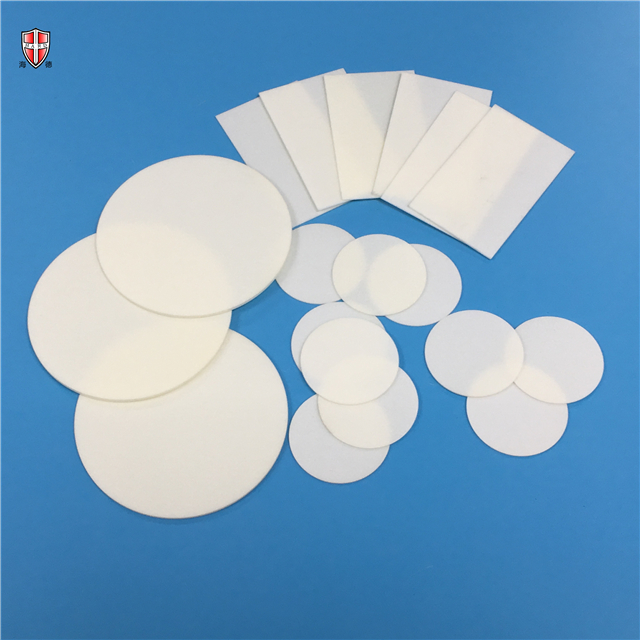
Alumina ceramics offer a favorable combination of hardness, electrical insulation, and cost-effectiveness, making them one of the most widely used
materials in industrial precision ceramics.
Depending on their purity, common grades include 95% alumina, 96% alumina, and 99% alumina.
Key characteristics include:
High hardness;
Excellent electrical insulation;
A well-established material system;
Suitability for a wide range of precision structural and insulating applications.
For components requiring high surface quality, wear resistance, and electrical insulation, an appropriate grade of alumina ceramic can be selected
based on purity, dimensions, and specific operating conditions.
3. Silicon Nitride Ceramic Polishing Wafers
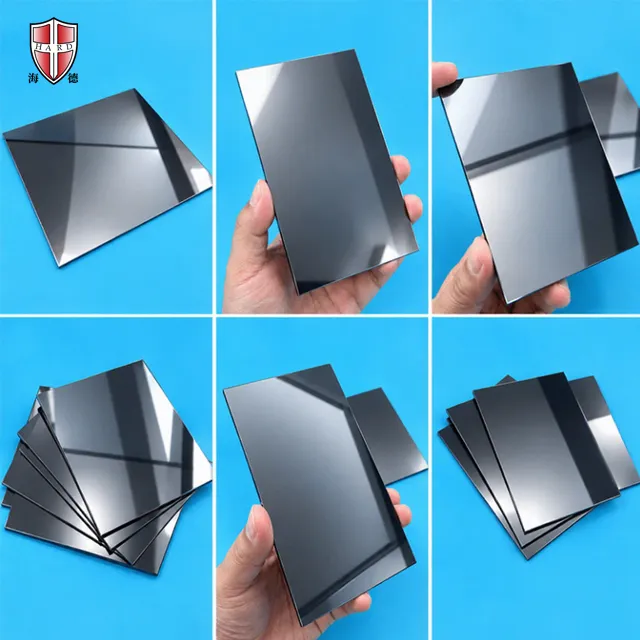
Silicon nitride ceramics offer a combination of high strength, good toughness, and excellent thermal shock resistance, making them suitable for
applications that demand high mechanical performance and thermal stability.
However, silicon nitride differs from aluminum oxide and zirconium oxide in terms of its material properties, sintering systems, and the challenges
associated with its processing.
When an ultra-smooth surface is required, it is necessary to develop specific grinding and polishing processes tailored to the material's characteristics,
and to verify the final surface quality through inspection.
How should one choose between different materials?
| Material | Key Features | Key considerations when selecting materials |
| Zirconia ceramics | Good toughness, wear resistance, and favorable chemical stability | Frictional pairing, dimensional accuracy, polishing effect |
| Alumina ceramics | High hardness, good insulation, and excellent cost-performance ratio | Material purity, surface quality, operating environment |
| Silicon nitride ceramics | Good strength and toughness, resistant to thermal shock | Processing difficulty, thermal environment, cost |
| Aluminum nitride ceramics | Excellent thermal conductivity, electrical insulation | Thermal conduction requirements, surface processing, and structural strength |
| Silicon carbide ceramics | High hardness, wear resistance, and high-temperature resistance | Brittleness, processing costs, operating medium |
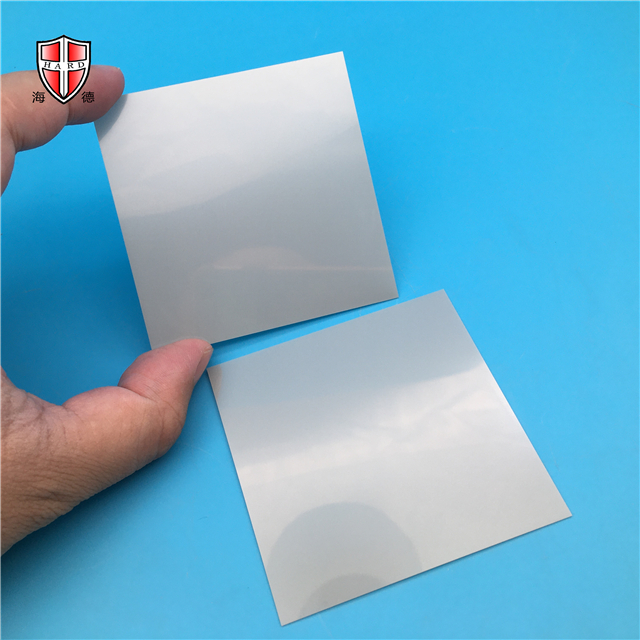
Aluminum Nitride Ceramic Polishing Wafers
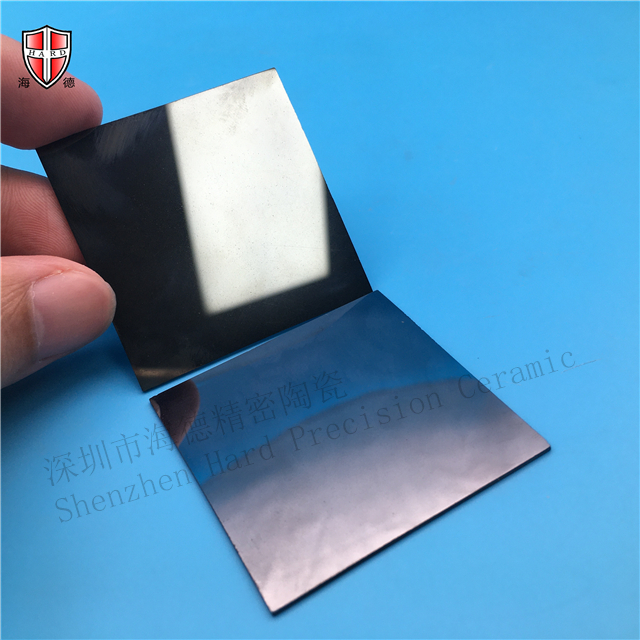
Silicon carbide polishing wafer
Different materials offer distinct advantages. The final selection should be based on a comprehensive assessment that considers product functionality,
the operating environment, processing requirements, and budget.
4. Why do high-precision ceramic polishing pads impose such high requirements on the manufacturing process?
Ceramic materials typically possess high hardness and limited plastic deformation capacity; therefore, precision machining requires careful attention to micro-cracks, edge chipping, localized damage, and surface defects.
Achieving a consistent, mirror-like finish generally requires the coordinated execution of multiple processing stages.
① Initial Forming and Sintering
Forming and sintering determine the fundamental dimensions, density, and microstructural state of the ceramic body.
If the ceramic body exhibits significant deformation, internal defects, or poor dimensional consistency, the complexity of subsequent precision machining increases accordingly.
② Precision Lapping/Grinding
Lapping is employed to incrementally refine dimensions, flatness, and surface condition, establishing a stable foundation for subsequent polishing.
During this process, it is essential to control the machining allowance, abrasive media, applied pressure, equipment status, and workpiece positioning
to prevent the formation of deep scratches or localized damage.
③ Precision Polishing
The objective of polishing is to further reduce microscopic surface irregularities and enhance overall surface quality.
Because different ceramic materials vary in hardness, toughness, and microstructure, specific polishing processes must be tailored to each material. For
high-precision components, it is also necessary to ensure uniform polishing and maintain precise control over the processing conditions at the edges.
④ Inspection and Quality Control
Following machining, components must be inspected against engineering drawings and technical specifications—evaluating parameters such as thickness,
flatness, parallelism, surface roughness, and visual appearance.
For large-format thin plates, ultra-thin ceramic components, and parts requiring high flatness, particular care must be taken regarding clamping methods,
measurement datums, and the testing environment to ensure that measurement results remain accurate and unaffected by external variables.
The core of high-precision ceramic polishing lies not merely in achieving a glossy surface, but in ensuring that surface quality and dimensional accuracy are
perfectly aligned with the structural requirements of the product.
5. In which fields are high-precision ceramic polishing pads primarily used?
As the demand for superior surface quality and precise dimensional control in sophisticated equipment grows, high-precision ceramic components are
increasingly utilized across a wide range of industrial applications.
Semiconductors and Electronic Equipment
In certain semiconductor tools, electronic devices, and precision positioning structures, ceramic components serve functions such as electrical insulation,
wear resistance, structural support, or precise positioning. The selection of an appropriate ceramic grade depends on the specific requirements for equipment
cleanliness, dimensional accuracy, and material properties.
Precision Machinery and Automation Equipment
In precision motion mechanisms, positioning assemblies, and wear-resistant contact components, high surface quality is essential for meeting specific fit
and operational requirements.
Optical and Precision Instruments
For instrument structures that require stable contact, precise positioning, or specific surface characteristics, suitable ceramic materials and processing grades
can be selected based on the intended function.
New Energy and Advanced Equipment
In various new energy systems, inspection equipment, and industrial automation setups, ceramic components are employed for insulation, support, wear
resistance, or as structural elements.
It should be noted that the specific function of a ceramic component is determined by its product design. Not all high-precision ceramic components are
suitable for use in optical mirror applications, wafer polishing, or critical semiconductor manufacturing processes; such applications typically impose additional
requirements regarding material purity, cleanliness, flatness, and the absence of surface defects.
6. Had Precision Ceramics: Custom processing of high-precision ceramic polishing discs
For high-precision ceramic polishing components, the selection of materials and the choice of processing techniques must be tailored to the specific operating conditions. Factors such as material type, thickness, dimensions, and precision requirements all influence the manufacturing process and the final cost.
Shenzhen Haide Precision Ceramics Co., Ltd. specializes in the customization of industrial ceramic components. Equipped with precision grinding, polishing, and CNC machining facilities, we evaluate optimal processing solutions for various ceramic materials based on client drawings, samples, and specific application requirements.
Materials available for custom fabrication include:
Zirconia (ZrO₂) ceramic polishing components;
Alumina (Al₂O₃) ceramic polishing components (available in various purity grades);
Silicon nitride (Si₃N₄) ceramic polishing components;
Aluminum nitride (AlN) ceramic components;
Silicon carbide (SiC) ceramic components;
Other precision ceramic components and non-standard structural parts.
For applications requiring high surface quality, we can evaluate grinding, polishing, and inspection solutions tailored to your specific materials, dimensions,
and drawing specifications. For high-precision targets—such as an Ra value of 0.02 μm—we recommend confirming inspection standards, sample results,
and acceptance criteria prior to full-scale production.
If you are seeking a supplier of high-precision ceramic components, please provide the following details:
Ceramic Material: Zirconia, alumina, silicon nitride, or other materials;
Product Dimensions: Length, width, diameter, and thickness;
Precision Requirements: Ra (surface roughness), flatness, parallelism, and dimensional tolerances;
Operating Conditions: Wear resistance, electrical insulation, thermal conductivity, corrosion resistance, or other specific requirements;
Procurement Needs: Sample validation, small-batch trial production, or mass production.
Haide Precision Ceramics can assist in evaluating materials and processing techniques based on your specific requirements, offering custom manufacturing
services for precision ceramic components—produced according to your drawings, samples, or unique specifications.
Our high-precision ceramic components go beyond a mere mirror-like finish; we prioritize verifiable surface quality, consistent dimensional accuracy,
and material selection perfectly suited to your operational environment.
Shenzhen Hard Precision Ceramics Co., Ltd. | Specialized in the custom manufacturing of industrial precision ceramic components.


