
 Deutsch
 한국어
한국어 日本語
日本語 Français
 Português
 Español
 Русский
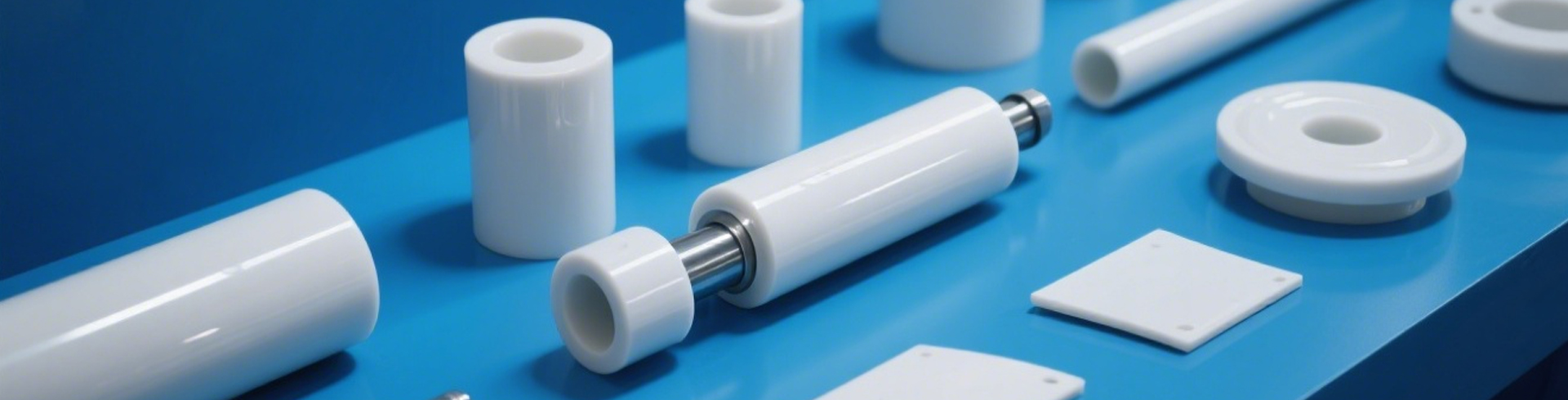
Basic properties of silicon nitride ceramics
Physical Properties:
High Strength: Hot-pressed silicon nitride is one of the hardest materials in the world, with an HRA hardness value reaching 90–93.
Low Density: The theoretical density is only 3.19 g/cm³, making it significantly lighter than steel and heat-resistant engineering alloys.
High-Temperature Resistance: The decomposition temperature is 1,800°C in air and reaches 1,850°C in a nitrogen atmosphere at 110 MPa.
Thermal Stability: It features a low coefficient of thermal expansion, high thermal conductivity, and excellent thermal shock resistance; it does not
crack even when quenched in cold water from 1,000°C.
Chemical Properties:
Resistant to oxidation at high temperatures and capable of withstanding thermal shock.
Inherently self-lubricating with excellent wear resistance.
Strength decreases with long-term use above 1,200°C; the standard operating temperature is generally limited to 1,200°C or below.
Resistant to oxidation at high temperatures and capable of withstanding thermal shock.
Inherently self-lubricating with excellent wear resistance.
Strength decreases with long-term use above 1,200°C; the standard operating temperature is generally limited to 1,200°C or below.
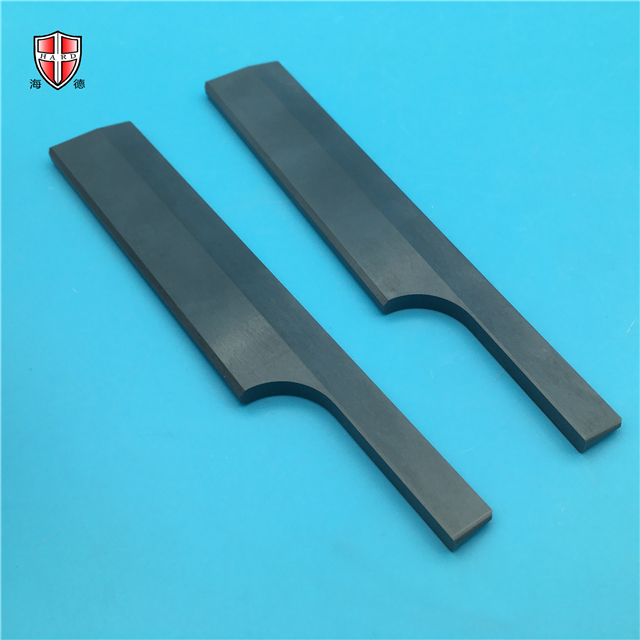
Application Areas of Silicon Nitride Ceramic Cutting Tools
As a representative of third-generation ceramic cutting tools, silicon nitride ceramic tools have demonstrated exceptional
performance across various industrial sectors:
Processing of high-hardness materials:Particularly suitable for machining hardened steel and hardened cast iron with hardness levels reaching HRC65.
Aerospace industry:Used for cutting difficult-to-machine materials such as titanium alloys and superalloys.
CNC machine tools:Meet the demands of high-speed cutting and enhance machining efficiency.
Specialized machining applications:Capable of handling high-impact operations such as milling, planing, and interrupted cutting.
It is worth noting that my country began research into silicon nitride cutting tools in the 1970s. In recent years, through the addition of rare-earth
oxides and the optimization of sintering processes and surface coating technologies, the performance of these tools has continuously improved,
allowing them to gradually replace traditional cutting tools in the processing of specialized materials.
What are the advantages of silicon nitride ceramic cutting tools compared to traditional cutting tools?
| Comparison Items | Silicon nitride ceramic cutting tools | Traditional carbide cutting tools |
| hardness | HRA90-93 | Generally lower than HRA 90. |
| Wear resistance | Excellent; durability is several to dozens of times higher. | Relatively low |
| Cutting speed | Enables high-speed cutting. | Speed restricted |
| Machining accuracy | The workpiece features low surface roughness and high precision. | Relatively low |
| Material costs | Using silicon, an element abundant in the Earth's crust. | Reliance on strategic metals such as tungsten and cobalt |
| Suitable materials | Capable of machining high-hardness materials up to HRC65. | Difficult to machine ultra-hard materials |
It is particularly worth noting that silicon nitride ceramic cutting tools enable "turning and milling to replace grinding," thereby simplifying
machining processes, saving time, electricity, and machine tool resources, and significantly boosting production efficiency.
Future Development
Performance Enhancement: Further improve tool performance by optimizing manufacturing processes and introducing new doping elements.
Application Expansion: Demand is set to grow rapidly in sectors such as new energy vehicles, semiconductors, and 5G communications.
Process Innovation: Develop a diverse range of products (e.g., specialized tools for interrupted cutting, milling cutters) and novel manufacturing technologies.
Cost Reduction: Enhance cost-effectiveness through large-scale production and technological improvements.
Driven by technological progress and advancements in new material technologies, the scope of applications for silicon nitride ceramics will continue to expand.
In the future, as material properties improve and processing techniques advance, silicon nitride ceramics will demonstrate their exceptional performance across
an even wider range of fields, establishing themselves as indispensable materials in the industrial sector.


