
 English
 한국어
한국어 日本語
日本語 Français
 Português
 Español
 Русский
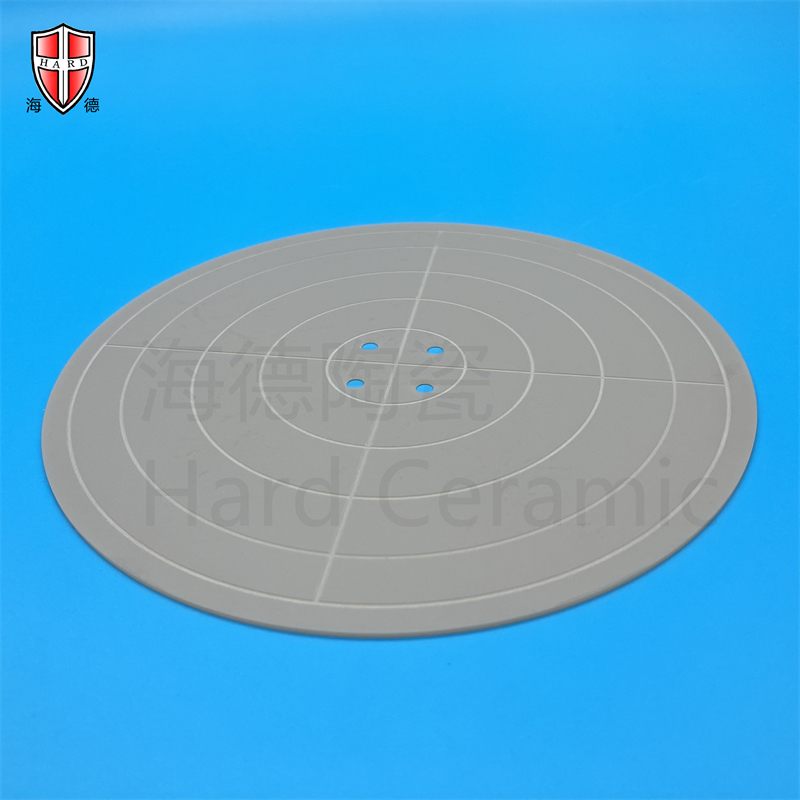
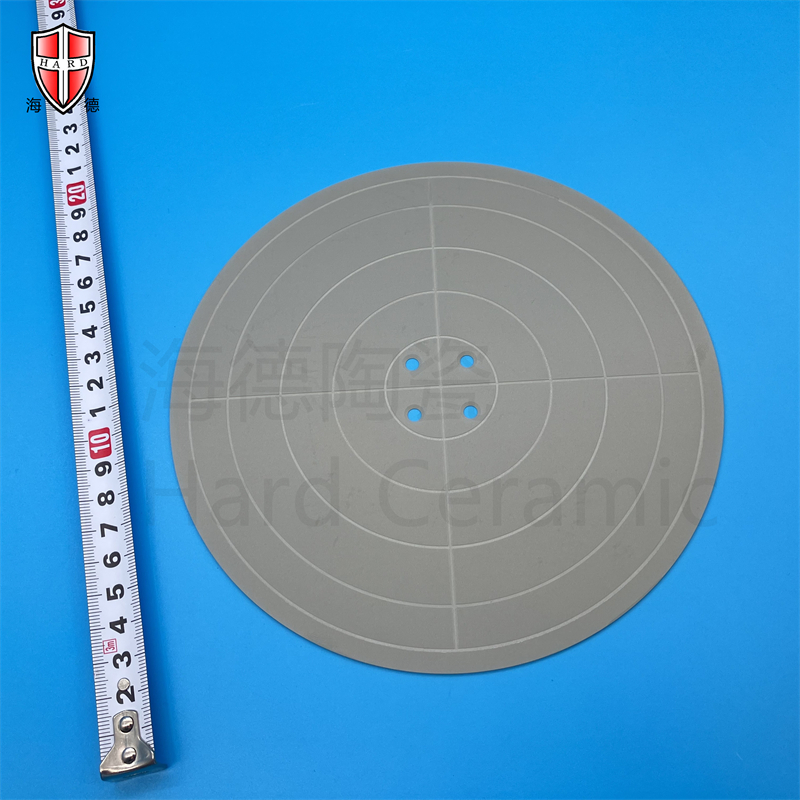
Designmerkmale
Hohe Wärmeleitfähigkeit und hervorragende Wärmeableitungsleistung:
Mit einer Wärmeleitfähigkeit von mehr als 170 W / m · K, die Aluminiumoxid weit übertrifft, kann es Wärme schnell ableiten und ist daher geeignet für
Wärmeempfindliche Vorgänge wie Laserbearbeitung und Chipverpackung.
Ausgezeichnete elektrische Isolierung:
behält auch bei hohen Temperaturen gute Isolationseigenschaften bei, verhindert Leckagen und macht es für Hochspannungen geeignet
Umgebungen und elektronische Trägerplattformen.
Hohe Festigkeit und Rissfestigkeit:
Im Vergleich zu Aluminiumoxidkeramik hat Aluminiumnitrid eine höhere Biegefestigkeit und Temperaturwechselbeständigkeit und ist mechanisch beständig
Stress und Thermoschock.
Gute chemische Stabilität:
Beständig gegen Säure- und Laugenkorrosion, reagiert nicht mit verarbeiteten Materialien und eignet sich daher für Reinräume oder hochreine
Umgebungen.
Anpassbare Struktur:
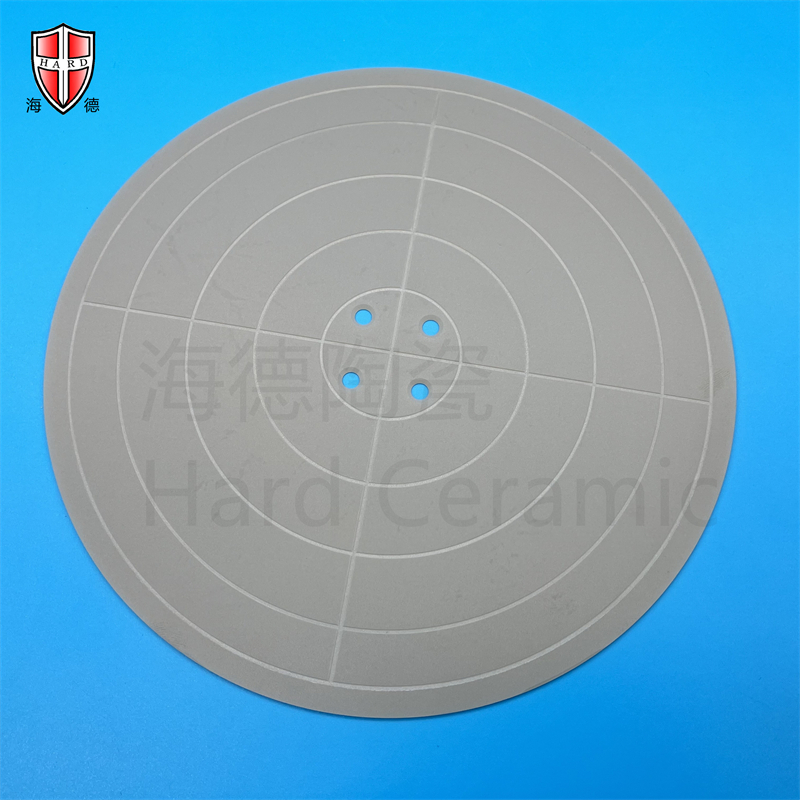
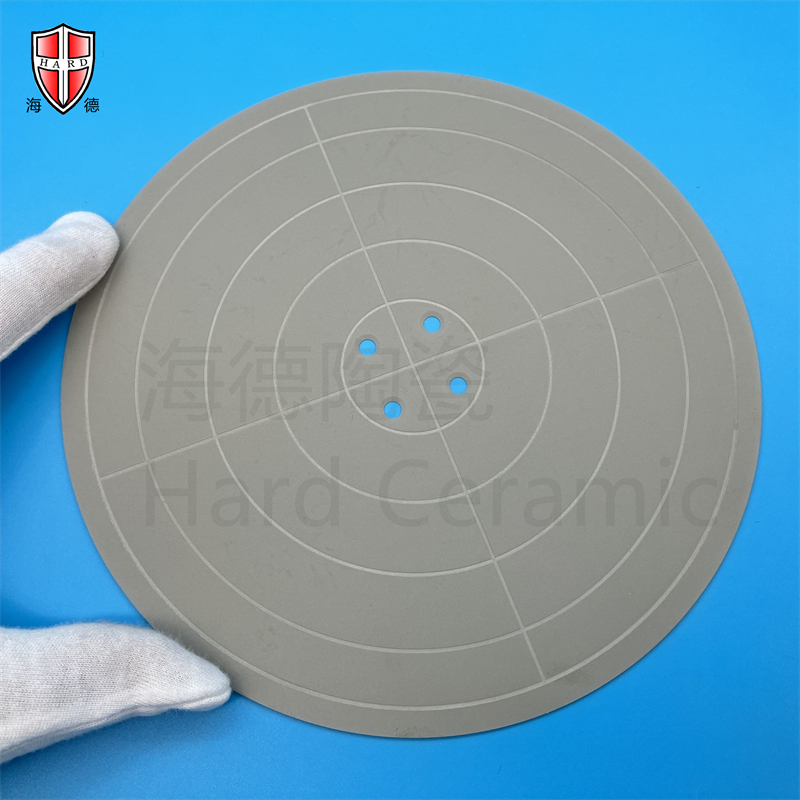
Die Oberfläche kann je nach Verfahren mit Mikroporen-Arrays, Vakuumtanks, Positionierungsrillen, Durchgangslöchern usw. bearbeitet werden
Anforderungen.
Stabilität der Hochtemperatur-Vakuumadsorption:
Selbst bei Dauerbetrieb in Hochtemperaturumgebungen bleibt die Adsorptionsleistung stabil, und es ist nicht
Leicht verformbar oder gerissen durch thermische Ausdehnung.
Anwendungsbereiche
Herstellung von Halbleitern:
Vakuum-Adsorptionsplattformen, die beim Wafertransport, bei der Photolithographie und bei Inspektionsprozessen eingesetzt werden, um die Positionierung zu gewährleisten
Genauigkeit und thermische Stabilität.
Laserbearbeitungsgeräte:
Stabilisiert und adsorbiert laserbearbeitete Teile und sorgt für eine schnelle Wärmeleitung, um eine Überhitzung und Verformung des Materials zu verhindern.
Präzisions-CNC-Ausrüstung:
Wird bei der CNC / Mikro- / Nanobearbeitung zum Spannen von spröden, dünnen Werkstücken wie Keramik- und Glasplatten verwendet.
LED und Optoelektronik
Industrie: Wird zur Fixierung und Kühlung bei der Verarbeitung von Saphir- und Keramiksubstraten verwendet.


