
 Deutsch
 한국어
 日本語
 Français
 Português
 Español
 Русский

Zirconia ceramic materials possess both thermal properties—which dictate their response to thermal stress—and mechanical properties. The geometric
configuration of the material and the nature of the surrounding medium also influence the thermal stress experienced by the ceramic. Consequently, "
thermal shock resistance"—defined as a material's ability to withstand temperature fluctuations—must be understood as a comprehensive reflection
of both its thermal and mechanical characteristics.
Thermal shock damage in zirconia ceramics can manifest as cracking and spalling under direct thermal shock, or as instantaneous catastrophic failure.
Based on this, two theoretical perspectives have been developed to evaluate the thermal shock resistance of brittle ceramic materials. The first is rooted
in thermoelastic theory, which posits that if a material's intrinsic strength is insufficient to withstand the thermal stress induced by a thermal shock, "thermal
shock fracture" occurs. According to this theory, to achieve high resistance to thermal shock fracture, a ceramic material should ideally possess a specific
combination of properties: high thermal conductivity, high mechanical strength, a low coefficient of thermal expansion, a low Poisson’s ratio, a low Young’s
modulus, appropriate viscosity, and a specific thermal radiation coefficient. Furthermore, reducing the material's heat capacity and density can also help
enhance its practical resistance to thermal shock.
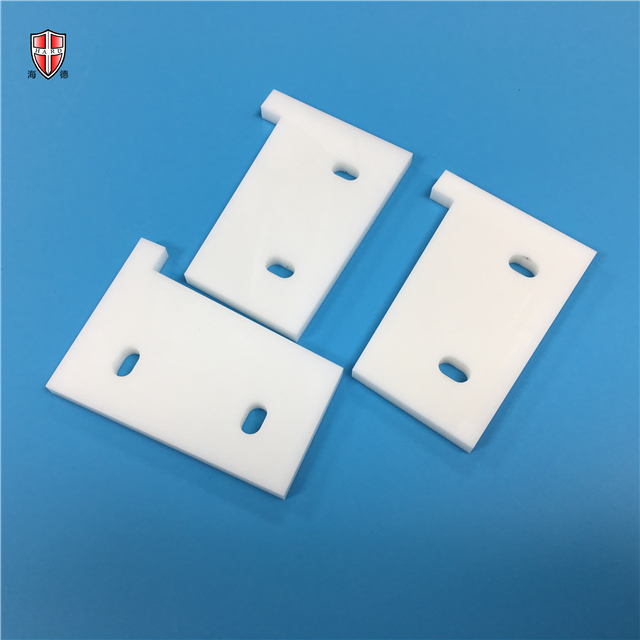
What are the performance parameters of zirconia ceramics, and how well do zirconia ceramic materials perform in terms of thermal shock resistance?
Another theory, based on the concepts of concrete fracture mechanics, posits that thermal shock damage occurs when thermoelastic strain energy drives the
nucleation and propagation of cracks—a process that requires the creation of new surface area. According to this framework, materials with superior thermal
shock resistance should ideally possess a high elastic modulus and low strength.
It is worth noting that these requirements are diametrically opposed to the criteria for thermal shock fracture resistance. Furthermore, enhancing the actual
fracture toughness of a ceramic material can significantly improve its resistance to thermal shock damage. The presence of a controlled population of microcracks
is also highly beneficial in this regard; for instance, in dense ceramics with a porosity of 10% to 20%, the formation of thermally induced cracks is often hindered
by the pores, which serve to blunt crack tips and reduce stress concentrations.
Zirconia-based ceramics are valued for their high-temperature mechanical properties, high melting point, and excellent chemical and thermal stability. Consequently,
they are frequently employed in high-temperature environments, making thermal shock resistance a critical performance metric. Zirconia is particularly unique,
existing in three distinct crystalline forms—monoclinic, tetragonal, and cubic—and exhibiting specific phase-transformation characteristics that enable a wide
range of functional applications. Significant research is also directed toward optimizing the thermal expansion behavior of these ceramics to further bolster their
thermal shock resistance.


