
 Deutsch
 한국어
한국어 日本語
日本語 Français
 Português
 Español
 Русский
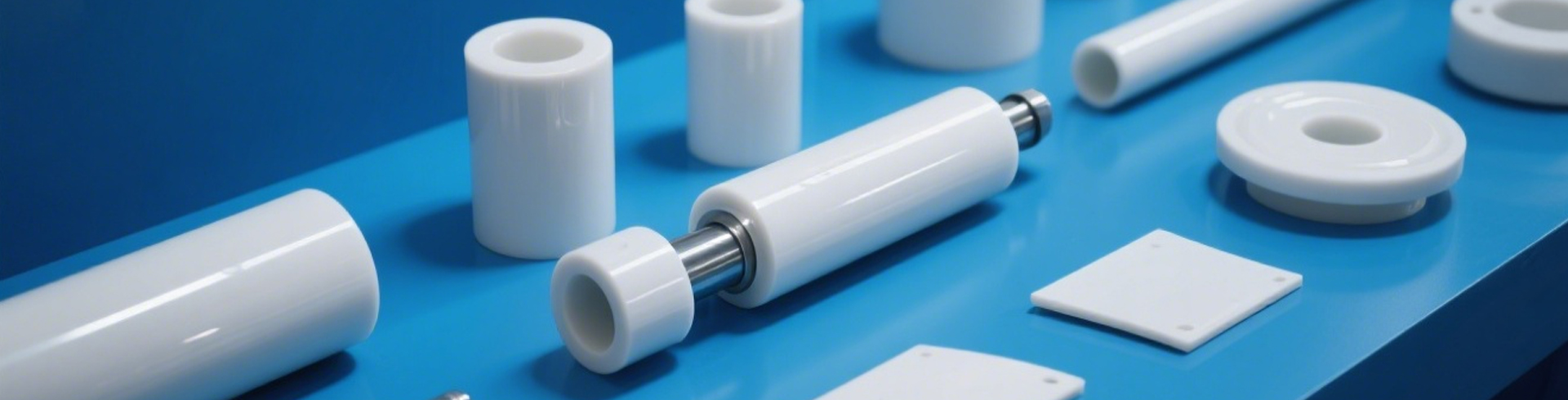
Before using alumina ceramic rods—and to minimize the formation of bonding agents on their surfaces—a special coating should be applied evenly.
Prior to insertion into the kiln, place the rods on the kiln roof (at approximately 120°C) to preheat and dry them for at least 12 hours.
The installation process—inserting the rods into the kiln—should be completed quickly to avoid prolonged heating without rotation. Maintain rod rotation under
load to prevent failure. When removing high-temperature rods from the kiln and transporting them, handle them using insulating material or by hand; keep the rods
vertical during transport—avoiding tilting or horizontal positioning—and prevent contact between the hot ceramic rods and cold metal tools.
Alumina ceramic rods are typically used without further machining, particularly in applications involving ceramic electronic components where precision requirements
are stringent. Alumina ceramics differ significantly from ordinary ceramics in terms of composition and manufacturing processes; while ordinary ceramics rely on
raw material preparation, body forming, and kiln firing, alumina ceramics are primarily produced via powder sintering.
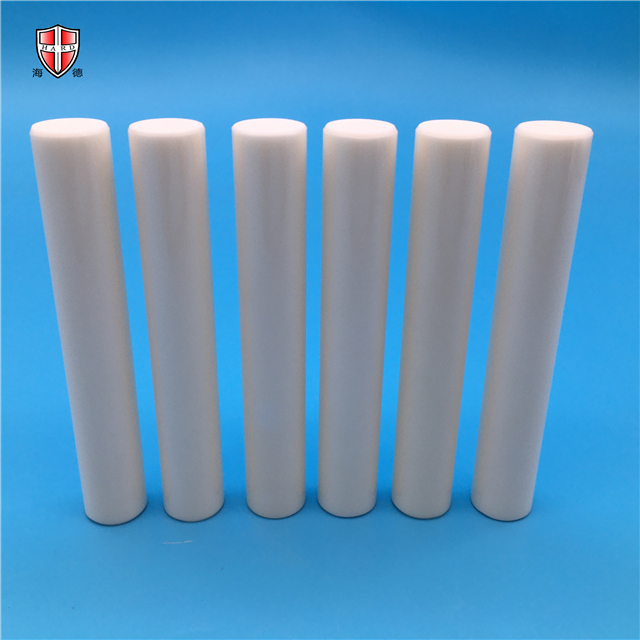
What are the preparation processes for alumina ceramics, and what are the machining requirements for alumina ceramic rods?
Due to the high hardness of ceramics, cutting and machining them during the forming process is difficult. This is particularly relevant for complex, non-symmetrical
components—such as automotive turbocharger rotors, bone implants, and dental prosthetics—which must emerge from the sintering process as finished products
requiring no further machining. To meet this need, injection molding techniques adapted from the polymer industry have been successfully applied to the production
of alumina ceramic parts.
The manufacturing process for alumina ceramic rods must meet the following three requirements:
1. The raw materials selected must be of high purity, and the particles should be as fine as possible.
2. Chemical composition must be strictly controlled. To ensure consistent quality and reproducibility, contamination and the loss of volatile components must be
prevented, and parameters such as grain size, grain boundaries, and porosity in the sintered parts must be rigorously managed.
3. Shape and dimensions.
Alumina ceramic rods are characterized by high strength, high hardness, and excellent wear resistance. They offer high-temperature stability, allowing for long-term use
at temperatures up to 1600°C, as well as strong corrosion resistance. They also possess excellent electrical insulation properties; notably, at high temperatures, they can
withstand a voltage of over 800 volts per millimeter of thickness. Their disadvantages include low toughness and poor thermal shock resistance, meaning they cannot
withstand rapid temperature fluctuations.


